
The Workforce of the Future

When we talk of the workforce of the future, we’re talking about people AND the things they need to do the work, be that for commercial gain, or in service of other people. What is clear is that talk of the future is not a singular story. Not one thread. Not just advancing technologies or increased automation. So we should talk of futures – plural. A range of potential options that help us prepare – because planning for such uncertainty is not just hard, it may be futile – for whatever choices, options, and challenges we face in that range of scenarios. No doubt that in evolutionary terms, our biggest challenge is our ecological stability. Whether you deny or believe in climate change – and indeed the emergency we now refer to it as – there are some potentially catastrophic scenarios for the future of our planet. What appears to be wrong is the debate on whether it is man-made or not. Though polluted seas with plastics are undeniably man-made. What scenarios we should focus on, is what can the human race do to mitigate, overturn and repair as part of our continued work and business ventures. Then we have social injustice and division. A negligence on supporting each other – human to human – whatever our heritage or situation. And we also see that Governments alone are not able to fix the issues we now face. We need people in a societal sense, and organisations in a business sense to create the forces for change through sustainable business and a more humanly world of work that we believe will shape the workforce in the coming years. At the heart of the current economic system – in which the 20th century evolved into – is the continued desire for profit. Yet, there are emerging, and competing forces, as the capitalist systems are being pitted against a higher sense of purpose, activism and impact. We are seeing business transformation at an accelerated pace, in large part, driven by the Covid-19 pandemic. Organisations are being re-designed to future-proof their existence in a world where profit is not everything – accepting it is a tangible result still – and where purpose is a more powerful determinant to a broader sense of what success is. The workforce of now is more aware of a connection to that higher sense of purpose. We see this in the B Corporation community as one example of businesses deliberately diversifying into more soulful, conscious, and sustainable ways to operate. What we are emerging into is a new sense of activism and inclusion. Not just political but societal, commercial, and ecological systems that need us to not simply partake in them, but reimagine and reinvent them. A workforce of consciously minded, creatively spirited, activist-leaning individuals, all united in a common purpose? We are aware that this sounds idealistic and even utopian! It would be naive to not recognise that these trends in our workforce will not be without challenges. The futures we project all point to a workforce that is more diverse. Because our world is diverse and organisations, as a microcosm of our world, should be diverse. Diversity has benefits that cannot be quantified. Diversity brings a difference of opinion, of understanding, of perspective; and in turn, respect. And within all of this, we’ve barely touched on the potential for digital technological advancement with quantum computing, robotics, and machine learning-based Artificial Intelligence (AI). To go full circle back to the need for respect for our planet, and our people. The futures we conceive mostly point to organisations being more humanly. Where purpose and profit complement, powered by people who have an entrepreneurial spirit in complex and more flexible systems of work. We already see businesses being designed with ‘sustainability’ at the core. The workforce of the future will have seen the planet change, as a result of our actions. They will be determined to correct wrongs. They will act consciously and collectively to do so. They will be enhanced by AI. But they will be human. And they will be purpose-led activists. So our question to leaders – and the people profession is – are you ready to prepare for a series of futures and this rise of people-powered activism? About the Authors Perry Timms Founder and Chief Energy Officer People & Transformational HR Ltd Kirsten Buck Chief Impact & Culture Officer People & Transformational HR Ltd
“Don’t Throw Out the L&D Baby with the Bathwater”, and Other Wisdoms From This Year’s Ground-Breaking Conference
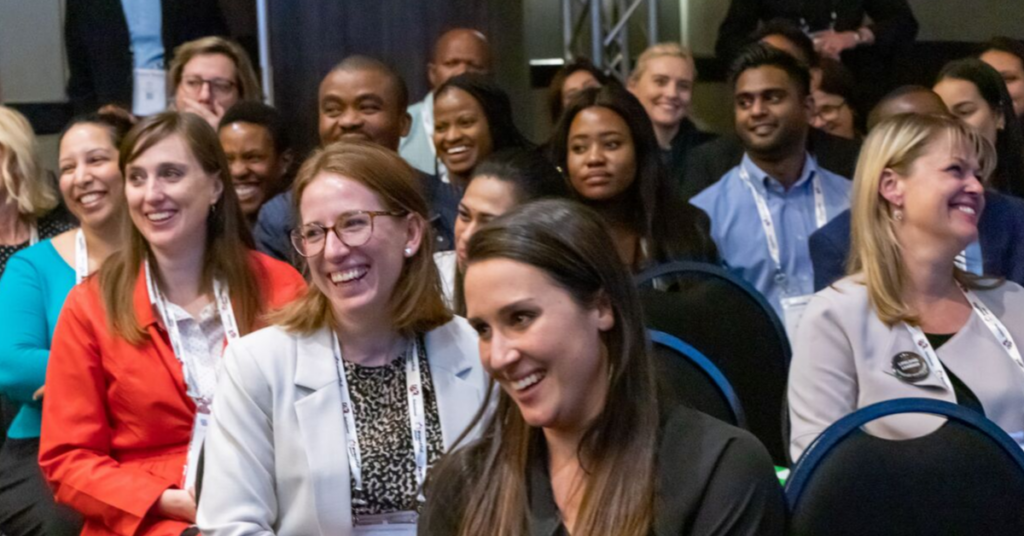
If I could share only three things with the ardent L&D specialist who could not make it to 2019’s HR & L&D Innovation & Tech Fest, they would be: “Learning is an ecosystem of experiences.” – Tim Slade “L&D has to change – otherwise we will become obsolete.” – Thea Pelser “Don’t throw out the baby with the bathwater.” – Wayne Mott This year, dedicated L&D speaker streams were introduced to the well-established HR Innovation & Tech Fest – a move heartily welcomed by South Africa’s corporate learning community. Professionals are still finding their feet in this ever-changing technological and organisational landscape, and the Eventful Group’s first roll-out has been right on target. Their diverse buffet of topics had the entire L&D tribe feasting – content developers, specialists, technologists and managers; rookies and veterans. “We are living and working in an incredibly disruptive time – technology is changing the way we work and live and it is only fitting, and essential, that the way we view and implement L&D endeavours keeps up,” says Andrea Erasmus, Co-Owner & Head of Production for The Eventful Group. “Some of the greatest minds in the L&D space came together under one roof during this conference. It connects people and gives the growing L&D community a unique platform to come together and learn, network and share ideas, challenges and wins.” Alice Herselman, Learning & Development Specialist at Oceana Group chose the talk on Sasol’s approach to designing their Learning Technology Ecosystem as her first session, “I’m so happy that I did – this is exactly where my organisation and team are at.” The compelling mix of speakers included international representatives that inspired, warned and equipped from their generally more-evolved L&D arena. Local speakers, in turn, shared their mighty feats of the corporate culture empires they built through the right Learning Management Systems, the stakeholder hearts they conquered, and the magic of Augmented Reality they harnessed. Learning is an Ecosystem of Experiences We’ve all seen this or have even designed it: learning content that is simply not crafted for how adults learn, or even worse – not designed to solve the actual performance issue. The award-winning US freelance eLearning Designer, Tim Slade, has a hard-won understanding of why learning fails (or rather, sucks, to bring home his point more vividly). “Sometimes,” he adds, “your role as an eLearning designer is to know when learning is not the answer – and be able to tell that to your clients or stakeholders.” Yet, even when we are clear on the need for a training programme, we have to avoid the next trap: blandly capturing information within a sterile online system and bombarding our learners with it. To create this ‘ecosystem of experiences’, we need to combine as many learning styles as possible, make learning active, and embrace blended learning. A forward-looking example of this is our own Zolani Lugawe from SA Taxi Development Finance that evangelized the digital learning revolution in his session: breaking ground for his organization, he incorporated AR (Augmented Reality) in a recent learning journey. L&D Has to Change – Otherwise We Will Become Obsolete “Call anything a pilot and people will try it.” This is how Thea Pelser got her L&D show on the road in 2014. As PwC South Africa’s Associate Director for Learning & Development, she ventured into very unchartered territory for this chartered community – forging their very own online learning programme. Her success was self-evident: with the average completion rate of MOOCS (massive open online courses) at only 10%, their programme reached an astounding 75%. However, her moment of true triumph happened when top management started to ask for more online learning. Two of the biggest obstacles was the perception around the quality of “eLearning”, and getting the right backing for her L&D development plans. She instead labelled her programme “self-paced learning”, and as for garnering support, she suggests we “work where the energy is; work with people that love new things.” Yet this journey has also brought her to a very sobering realization: “L&D has to change – otherwise we will become obsolete.” Don’t Throw Out the Baby With the Bathwater Wayne Mott from Agilite Consulting shared the journey that Melbourne Waters undertook to create an intuitive learning system that could seamlessly blend into the ever-busier lives of learners, using JIT (just-in-time), WIIFM (what’s-in-it-for-me) and micro-credentialing formats. The vibrant, interactive end-result was called “The Pond”. Creating a platform on this scale can be intimidating to South African L&D managers – how do we suddenly break away from the course we’ve set (often based on limited funds, technology, and infra-structure) to align with what is on offer nowadays, at a much lower cost that just 5 years ago? Wayne’s advice is perfectly pitched, “Don’t throw the baby out with the bathwater – use what you have while you adjust and improve your learning pathways over time.” Looking to the future, he also urged us to remember the ever-decreasing information half-life. In an era where the-learning-and-unlearning cycle will become the norm, learning how to learn will become one of the most prized skills. During the panel discussion wrapping up the conference, Wayne mirrored Thea’s warning on the crucial need for adaptability, “At a next conference, I would like to deep-dive into how L&D needs to reinvent itself – and change to support what’s to happen in the future.” “Upskilling,” concluded Jessica Miller-Merrell, an American speaker from Workology, in a final question about global trends, “It is going to be pretty universal across the workforce.” Learning and Development in South Africa must be ready. We must be resilient, resourceful, and as always, ragingly passionate. The conference sponsors also had their say: “The Eventful Group’s conferences are always the most relevant – the team is very meticulous when it comes to the detail and very accommodating to last-minute requests.” – Judith Aranes, Marketing Manager for BountiXP.com “Of all the annual human development conferences in South Africa, we find this one the most fruitful.” – Geoffrey Payne, Product Development Manager from Lesson Desk About the Author Ilse de Vries is a human-development zealot and hopelessly excited about learning and development, in South Africa and in its digital incarnation. She is also an adventurous content strategist and content creator. Over the last two decades, she has honed her skills as a learning and marketing specialist in the UK, Japan and South Africa.
HR and L&D Start-Up Competition

Do you have an innovative HR or L&D solution that is going to change the way we work? Want the chance to demo your product in front of South Africa’s fastest-growing HR and L&D community? We want to hear from you. We are hosting a start-up competition for HR + L&D Innovation & Tech Fest 2019. This is your chance to get your product in front of 350 HR and L&D professionals as well as international thought leaders and workplace tech vendors. You’ll receive a free pass to the event in Johannesburg from the 26th to 27th August 2019 and the opportunity to demo your product to our community. If you tick the following boxes, we want to hear from you: You’ve created a kick-ass piece of HR or L&D solution Your company has less than 10 employees You can be in Johannesburg from 26th to 27th August 2019 Email Emma Buitendag on emma.buitendag@theeventfulgroup.com if you think your technology needs to be seen! Tell her why your technology should be featured at HR + L&D Innovation & Tech Fest’s start-up showcase. One winner who will be chosen to showcase their technology at the event. The judges’ decision is final and no negotiations or correspondence with entrants will be entered into. Flights and accommodation will be at your own expense.
The 3 Essential “How’s” of Learning & Development Tech in South Africa

Somewhere in South Africa, an L&D Manager is sitting on her couch, wine glass and tablet in hand. She devours yet another video of the awe-inspiring training tech mushrooming up around the globe. And sighs. These inventions are the elixirs to our unique educational problems, but we are yet to discover a way to bottle it in our digitally deprived state. How would she describe the impact that technology is having on L&D endeavours at her organisation? This was one of the main questions asked in The Eventful Group’s 2019 research report* into L&D Innovation in South Africa: a third of our companies reported no impact at all, and almost 10% confessed to a negative effect. The reason for our country’s lag in adopting L&D technology is not a mystery. It is the perfect storm brewed up by deficient digital infrastructure, government policies that fail to bring revolutionary change in education, and legacy learning models that are not keeping up with global research. However, thanks to the passionate, can-do attitude of our local L&D community, those doom and gloom sighs are promptly replaced by a glance at the horizon: How can we adapt and thrive digitally? How exactly is technology changing Learning and Development? How do we keep the best of both worlds: our humanity and progress? When The Eventful Group unearthed these questions in their research, they boosted the representation of Learning and Development at their annual HR conference to introduce the first-ever HR + L&D Innovation & Tech Fest. Here’s a sneak preview of how their impressive selection of industry-leading, award-winning speakers will be tackling these questions in Rosebank on 26 and 27 August 2019. How Can South Africa’s L&D Adapt and Thrive Digitally? “If you do not understand and embrace digitalization as an L&D Exec, then you risk becoming irrelevant,” warns Shaun Dippnall, CEO of EXPLORE Software, in his talk on day 1. With stories of his 7-year journey and compelling case studies, he sheds light on the difficulties and rewards of becoming a digital-first Learning and Development company. On day 2, Wayne Mott, Senior Advisor at Agilite Consulting in Australia, challenges what we believe about our own L&D digitalisation: “Is it really turning the principles of learning on its head?”; and point rookies in the right direction, “What do you need to do right now? Where do you invest?”. He’ll probe the role of machine learning and Artificial Intelligence (AI) in the realm of training, and urges us to “act now, or we will be left behind.” How Exactly is Technology Changing Learning and Development? Statista, one of the most successful statistics databases in the world, recently delved into learning technologies used by L&D departments worldwide – specifically the growth of various channels between 2018 and 2019. Video learning showed the biggest jump of 28%, followed by a 16% increase in games and learning simulations. How would South Africa stack up? Rob Bothma is a Strategic Business Solution Engineer at Oracle. On the second day of the conference, he’ll tell us how employees use gamification, artificial intelligence and chatbots to design their own learning journeys based on their unique career goals and through “flexible hybrid learning paths with content accessible on their cell phones.” Speaking of mobiles, remember the Pokémon GO craze of 2017? Then you need no introduction to Augmented Reality (AR). Sometimes confused with Virtual Reality (VR) that exists solely in digital form, AR superimposes digital content on the real world through screens or AR goggles. Statista revealed that AR users increased from 60 million in 2013 to 200 million in 2018. Using AR in training and development gives new meaning to the phrase “hands-on learning”: its engaging and experiential nature has revolutionized medical education and is making training in the manufacturing industry exceedingly safer. On home soil, Anglo American Platinum introduced AR into their in-house HR and training programme, Manning for Success (M4S) in 2017. Senior Functional Specialist and AR ideas guru Hugo Coetzee shares their journey on the same day. How Do We Keep The Best of Both Worlds: Our Humanity and Progress? “The robot is the new sabre-toothed tiger,” says Tricia Jones, Capacity Builder at Innovative Capacity Building Solutions, on day 2. She explains how our perception of threat sends us into survivalist mode where we “cling even tighter to traditional ideas about jobs and one-size-fits-all people practices.” But she also shows us another way – one that will re-awaken the power of human potential. Elmarie Grant from Webber Wentzel points out an all-too-common dilemma for L&D managers like herself: “How do we navigate the tightrope between the relentless drive for technology and innovation and our ingrained human resistance to change?” Find out on day 1 if she believes there are benefits to remaining human as AI becomes an integral part of employee training. Interested in joining your forward-looking L&D community members at the first HR + L&D Innovation & Tech Fest? You can ogle the full agenda here. *The Eventful Group’s 2019 L&D Innovation Research Report – get your copy here. Get Your Tickets If you’re reading this before or on 2 August, you’re in luck – the Early Bird tickets are still available at R12,995 excl. VAT (standard tickets are R14,995 excl. VAT). You’ll dine like the king or queen you are and get the (electronic) keys to all the content and full participant contact list. About The Author Ilse de Vries is a human-development zealot and hopelessly excited about learning and development, in South Africa and in its digital incarnation. She is also an adventurous content strategist and content creator. Over the last two decades, she has honed her skills as a learning and marketing specialist in the UK, Japan and South Africa.
How To Create Your L&D Mission Statement

For sale: baby shoes, never worn. The greatest short story ever told. Ostensibly written by Ernest Hemingway. Perfectly punctuated for effect. Drawing you in. A challenge to connect the dots. Every word, a purpose. “Writing really is a technology for clear thinking.” Someone said to me in conversation a few days ago. There is an almost spiritual but certainly useful value one gets when pen is put to paper. The ultimate act of introspection. An exercise in authenticity. Stripping away the decorations. Revealing the true essence of the path you are on. As Learning & Development (L&D) professionals you are the custodians of the story of human potential within your organisation. When the right story is in place it lights the way for decision making. To galvanise individuals and teams it is your most important tool. Infusing itself into the fabric of every structure and interaction. And like all good stories crafted it all started with… a bit of spaghetti. 6 Steps To Finding & Writing A L&D Mission Statement Step 1: Throw spaghetti at the wall and see what sticks. The goal here is to let go of all assumptions. All formal habits. Free yourself of the little voice in your head that tells you this is how it should be done. Take a piece of paper. Find a notebook. And just start writing. Unrestrained. Free-hand. Preferably fully written-out sentences. Think of it as a journal entry. Let the words and sentences flow. Make it personal. “I feel” “I want to” “I think”. Positive or negative. Optimistic or pessimistic. Don’t know where to start? Write down “I don’t know what to write.”. Trust me, the rest will take care of itself. Don’t share it with anyone. Don’t judge. Just write. Personally, I like to do this every morning for 20 mins, for a week. Start noticing some of the themes that are revealing themselves. Words, phrases and sentences that intuitively grab you. Highlight them. Step 2: Let it marinate. The goal here is to refine your thinking. One of the many beautiful outcomes of free-hand writing is that it forces your brain to look closer. A process that continues sub-consciously as you are jogging, sitting in traffic, making coffee – continuing with your day to day activities. A bit of time forces your brain to act as a filter. It auto-stress-tests your ideas. A day or two and you will find yourself eager to start translating your free-thoughts into something concrete. Step 3: Pose scenarios that you want to see play out. Take this example: “A man sets out to build a robot.” A passive action with no motivation. Then consider: “A man sets out to build a robot to win back the love of his life.” Now we have a story! A clear way to benchmark whether success was achieved or not. The best mission statements can almost be read as active characters in a story, on a journey towards achieving a goal. Inviting you to see how it plays out. Nike sets out to “bring inspiration and innovation to every active person in the world.” Lego is on a journey to “inspire and develop children to think creatively and experience endless human possibility.” Yuppiechef is on a journey to “test and source the best quality products for people who really care about cooking.” Write down 5-6 potential scenarios you’d like to see realised. A single sentence. Put your L&D programme on a journey, an adventure, a quest to do something great. Step 4: Strip it down. We all have it: Verbose-illitis. The tendency to use 10 words when 5 will do. Okay, that is a made-up word. But you get the picture. The goal here is to remove any and all redundancies. Take this classic writing example: I also have a habit of being very critical with the number of words I use in each sentence. Challenge yourself to remove four words from each of your scenarios above. Not an easy exercise. Trust that the reader will get it. Step 5: Share it, with friends. The time has come. You have 5-6 strong statements. Born out of authenticity. Crafted with care. The goal now is to identify the one. When sharing you want to avoid getting discouraged or get lead down a new path. The work you’ve done is good. Trust the process. Trust yourself. Approach two or three close friends or colleagues. Sit with them, face to face. See which statements they just get. No explanation needed. You’ll quickly be able to remove two or three that aren’t hitting the mark. Don’t be surprised that you immediately and instinctively know which ones to remove seconds before they’ve even started reading. Your writing intuition is well in place by now. When ready, start sharing your shortlist with more people. Slow bursts though. Throw one or two into an informal conversation. Your confidence is growing, so you’ll know when feedback is valuable and when it can be ignored. Step 6: Hit the corridors. In my experience, this is the most difficult part of the process. It’s the “Sell me this pen”-moment. You have a mission statement. Now you have to package it and get internal buy-in. An entirely new article can be written on this section alone, but the most important thing to remember is the Story. Like any juicy urban legend, framing your statement in a story format makes it exponentially easier for others to connect with it and share it with others. Take the example of an entrepreneur education company I’m a partner in. “A client once told us ‘I never trust a skinny chef’. This set us on a path to taste test the ingredients of entrepreneurship and launch Heavy Chef to celebrate those that ‘do’.” The Heavy Chef story has been told consistently for almost 11 years now and to this day is the company’s most powerful marketing tool. About the Author Where knowledge is shared, wonder deepens. This philosophy underpins Louis Janse Van Rensburg’s work as an investor, entrepreneur and researcher at the intersection of education and technology. Louis is the CEO of education investment fund, Glengarry Capital, Chairman of entrepreneur learning initiative, The Heavy Chef Foundation and a PhD researcher on non-formal learning. Creative, optimistic and pragmatic, Louis weaves storytelling with empirical data to challenge us to reimagine the way humans learn.
No Longer HR’s Sidekick: 7 Ways This Conference Will Make You An L&D Superhero

Learning and Development has come a long way after it signed up as an ardent sidekick to HR (its Big Daddy) 25 years ago. 45% of leadership now views the L&D department as “an important business function” in South Africa*, and on 26 and 27 August 2019 it joins the already popular HR Innovation & Tech Fest as a fully represented entity, creating the first ever HR + L&D Innovation & Tech Fest in Rosebank. With an ambitious mandate to combat unemployment, poverty and the economic downturn, the passion and dedication of the L&D community come as no surprise. Superhero status is the next step – here are the 7 ways this conference will transform your L&D career with timely, thought-provoking talks by influential local and international speakers. So, let’s power up! Craft a Robust, Realistic L&D Strategy Your L&D strategy has to get “the big 5” all in one shot: Attract and retain talent. Develop people capabilities. Create a values-based culture. Build an employer brand. Motivate and engage employees. – McKinsey For this, you must brave new terrain, but you don’t have to reinvent the wheel or hunt alone. Move closer to the inner circle of influential L&D veterans who have done battle and lived to tell their tales: “First ask how people learn,” cautions Zolani Lugawe from SA Taxi Development Finance, then craft your digital strategy, and only then go shopping for an LMS. Louis Janse van Rensburg, CEO of Glengarry Capita, challenges us to think like an investor by asking, “Can you communicate your L&D strategy in less than 3 minutes?” Pick the Perfect Learning Management System (LMS) The weight on the L&D leader’s shoulders to get this right is colossal. At times, it might feel a bit like choosing a life partner: Which one will I love now and forever? How do I create a relationship with a provider that will blossom and strengthen over time? What if things go wrong – do I need a prenup? Why not get advice from the best? Bruce Walker brewed up the eLearning platform of Distell, and Tanith Mohale brought Sasol’s Learning Technology Ecosystem to life with a creed of “fit-for-now, fit-for-purpose, fit-for-future”. You can even speed-date software with two showcasing sessions. Don’t miss out on Lesson Desk’s interactive demo; their “Content Crew” also help develop material from scratch to digitalization, which brings us to the next superpower… Create Memorable, Meaningful Online Content You bought the Rolls Royce of LMS’s and you’re introducing it to the staff with a champagne party and a petting zoo for the kids… Crickets chirp. How do we get people exciting about learning? Just look over at what the content marketing industry has been doing right: their worth of $195.58bn in 2016 is estimated to catapult to $412bn by 2021. How? By obsessing over the audience. We need to obsess about the learner first and create learning content that fascinates and engages. “The sad reality is that most courses require learners to sit through a disappointing experience,” says Tim Slade, an award-winning eLearning designer from the US. Wayne Mott from Agilite Consulting in Australia warns that “the opportunity to engage learners in a digital world is growing smaller.” Fortunately for us, these two wizards will work their magic on day 1 and tell us exactly how to fix our online learning content and ecosystems. Use Data Correctly and Powerfully “Approximately 84% of digital transformation initiatives fail – how can data be leveraged to create a realistic transformation roadmap?” asks Liora Gross, Director at the Center for Creative Leadership, who will take the stage on day 1. In his product showcasing on day 2, Jurie Van Zyl demonstrates what cloud solutions like Skillogical bring to people development. Getting individual employee ROI in line with the overall company goals becomes a lot less challenging with a simple, dependable and intuitive system. He boldly promises to “give dashboards a whole new meaning”. Balance remains important though. In his insightful keynote “Are You Watering the Right Tree?” director and psychologist Gregory Bayne explores how we can harness data and technology and still nurture our people’s well-being. Ignite a Remarkable Learning Culture Thea Pelser had no idea what she was getting into. But it was what she walked out with that astounded her most: PwC’s learning culture had also completely transformed. In her talk, she shares her 4-year quest to adapt this multinational powerhouse’ training strategy for millennials, how vital the learning experience is, and how you too can infuse your company’s learning culture with passion and meaning. Liberty Group’s Masindi Hoppenbrouwers had a similar journey, but her road to the right LMS and revamped learning culture trailed through the often-murky waters of a restructuring. Her lessons will help all L&D leaders cultivate a comfortable relationship with the future. Know What’s Happening With L&D Tech What kind of tricks will technology play on L&D’s future? Throwing bones and gazing in crystal balls are all the rage now, but perhaps we should seek advice from an old-school prophet. Like Oracle’s Rob Bothma. “Flexible hybrid learning paths…” the wise man mutters. Then something about “gamification, artificial intelligence and chatbots” – make sure you join him after the coffee break on day 2. When you’re done digesting that, after lunch, Wayne Mott tells you what you absolutely need to know right now about digitalization and where to invest. He’ll also throw in some real-world advice on tackling obstacles. Alternatively, go explore augmented reality instead – Hugo Coetzee from Anglo American Platinum’s “AR in Action” falls in the same time slot. Dessert is served straight afterwards in Tricia Jones’s “The Rise of Humans: How Robots will Re-Awaken the Human Potential”. Be Ready for Disruptive Employment Models The 9-to-5, brick and mortar employee model has been turned on its head by the dual forces of technology and millennials (yes, those “kids with the selfies” that will make up 75% of the global workforce by 2025). Flexibility and accessibility are now currencies that L&D professionals also have to trade in. Susie Gleeson-Byrne is Uber’s Head of HR in Australia and New Zealand – who better to take us through the opportunities and challenges of the gig economy? This trend has infiltrated all employment levels – a Mavenlink study revealed that 63% of full-time executives would prefer to be a contractor. Flexibility and location-independence are the major drawcards for the virtual workforce, yet 70% of remote employees feel left out of the workplace. In his deliciously titled “Remote Success: How My Team Beats Your Team in Their Pajamas”, Chris Dyer points out the immense opportunities to cut costs and retain prize employees and tells us how he keeps his fully remote team engaged. Mingle With Flair, Cocktail in Hand Yes, I did say 7 ways – but your new superhero status absolutely compels you to strut around on the glamorous verandas of Rosebank’s Hyatt Regency after the first day and hang out with people who are as passionate as you are about learning and development (drinks are included of course). *The Eventful Group’s 2019 L&D Innovation Research Report – get your copy here. Get Your Tickets If you’re reading this before or on 2 August, you’re in luck – the Early Bird tickets are still available at R12,995 excl. VAT (standard tickets are R14,995 excl. VAT). You’ll dine like the king or queen you are and get the (electronic) keys to all the content and full participant contact list. About the Author Ilse de Vries is a human-development zealot and hopelessly excited about learning and development, in South Africa and in its digital incarnation. She is also an adventurous content strategist and content creator. Over the last two decades, she has honed her skills as a learning and marketing specialist in the UK, Japan and South Africa.
HR + L&D Innovation & Tech Fest: What’s New for 2019?

The Introduction of L&D Innovation & Tech Fest This year’s HR + L&D Innovation & Tech Fest is going to be the best one yet. Perhaps the biggest change will be that, for the first time ever, we’re combining the much-loved HR Innovation & Tech Fest with the brand-new L&D Innovation & Tech Fest. Two communities will come together to learn, connect and develop. We’ve built significantly on last year’s event, we’ll be going from three to five tracks of content this year. Last year we had 250 people, but with the addition of L&D Innovation & Tech Fest, we’re expecting close to 400 attendees. All in all, you can look forward to 50 sessions across the two days – a mix of case studies, panels, solution showcases and more. More International Thought-Leaders Than Ever Our event producers, Andrea Erasmus, Jane Simonsen and Emma Buitendag, have been scouring the globe over the last few months to find the most innovative HR and L&D thought-leaders and change-makers. They’ve put together this impressive agenda for the event on 26 and 27 August 2019. We have seven internationals from the USA, the UK, Australia and New Zealand coming to South Africa to share their insights and perspectives with us. One speaker you definitely won’t want to miss is Susie Gleeson-Byrne, Head of HR for Uber Australia and New Zealand, who will be speaking about the future of work and the gig economy, as well as learnings from Uber’s cultural journey. Cutting-Edge Local Customer Case Studies We haven’t forgotten about all the amazing innovation happening right here in South Africa. Distell’s People Development & Capability Manager, Bruce Walker, will be discussing how they developed an e-learning platform for a multibillion-rand company and its 470 sales representatives and Absa’s Lead of Transformation & Change, Riaz Patel, will take us on their rip-roaring voyage to digitise HR. We also have 10 other exciting local customer case studies on the agenda. Giving Start-Ups A Leg-Up This year, we’re hosting a very exciting competition for start-ups, where the winners will be given free tickets to the event, as well as the incredible opportunity to demo their innovative HR or L&D technology to South Africa’s biggest HR and L&D innovation and tech community. We’ll be announcing the competition guidelines soon, so keep an eye out if you, or someone you know, has created a ground-breaking piece of HR or L&D technology that deserves to be shared! A Greater Focus on Soft Skills This year, we’ve put more focus on soft skills such as leadership, change and people management. These topics often get the backseat in favour of topics such as data and analytics and the future of work but understanding the impact of softer topics will allow HR and L&D professionals to harness the best of their teams and enhance team dynamics. Leigh Bowden from Workspace Synergy will be discussing such topics in her session on “Compassion at Work”, and Gregory Bayne from Total Leader & Coach Solutions Australia will get into the key principles underpinning a culture of accountability in his session “Build a Culture of Accountability: Transforming Organisational Performance and Outperforming Your Competitors”. Bigger HR and L&D Tech Expo We often hear from our community that the exhibition area is one of the most useful aspects of the event. This year, the exhibition area has expanded to incorporate HR tech and L&D tech vendors, which is why we’ve moved to a bigger venue, the Hyatt Regency in Rosebank, Johannesburg. The latest in HR and L&D technology will be showcased to help you select the best products for your business. About the Author Andrea Erasmus is the Head of Production for HR + L&D Innovation & Tech Fest. She scours the globe for the most innovative HR and L&D teams, out-of-the-box thinkers, and inspiring change-makers and creates two incredible days of inspiring keynotes, interactive sessions and panel discussions.
NZ Rugby’s Head of People on the Power of Vulnerability in Leadership

For years, rugby has been a sport celebrated for its focus on teamwork, respect and promoting a fun and healthy lifestyle. However, in 2016 New Zealand Rugby found itself in the spotlight for all the wrong reasons: an end of season stripper scandal, a sexual misconduct charge, and an assault on a group of four civilians. New Zealand Rugby was heavily criticised at the time for its handling of the incidents as well as its lack of transparency. Richard Gilhooly, Head of People & Development at New Zealand Rugby, is part of the team that continues to work hard to rebuild the organisation and sport that had suffered immensely from the fallout of these scandals. He’ll be sharing his story at HR + L&D Innovation & Tech Fest in Johannesburg this August. Here, he tells us about the critical relationship between the Head of People and the CEO, and why showing vulnerability is a powerful way for leadership to unite people. Changing the Culture of Rugby from the Inside Out The back end of 2016 was challenging for New Zealand Rugby and a very demanding period for our leadership and people. The off-field issues called the culture of our sport into question. We were criticised for our handling of the investigations and it really hurt the organisation and our people. After a full review around the culture of our sport, including New Zealand Rugby as an organisation, we received the “Respect and Responsibility” report which included 91 recommendations for us to implement. While this was not an insignificant undertaking, it really did allow us to consider how we could make rugby a better sport for all involved and how we might take a leadership role in some of society’s more pressing issues. We have subsequently taken ownership of all 91 recommendations with close to 30 completed and a similar number underway. In a lot of ways, the report provided relief for our people; a way forward. But it was also quite confronting: What did this mean for them? How would it change their organisation? There was a general feeling that we were all here for rugby, so what’s all this other stuff? Actually, working through all that was quite challenging. The review really shone a spotlight on the current state of our organisation: were we structured in the right way to be able to bring about the change that was required for NZ Rugby to be successful moving forward? It became quite clear that there were some aspects of our organisation that needed to look different in order to do things in a really different way, and in 2018 we went through a significant restructure. For the first time in a long time, we made the incredibly difficult decision to disestablish roles which had serious impacts for some of our people. The Power of Vulnerability in Leadership The organisational change we went through really hurt many of our people – some mentioned that they felt like the ‘safety net’ they had was gone. They lost a lot of trust in the organisation and some of that was directed towards our CEO, Steve Tew. That was quite a big moment for us. We needed to figure out how to move people forward and regain that trust. Ahead of our annual staff get together, we asked our people for some real and unfettered feedback as to how they were feeling and how the change had impacted them. Some of the feedback we received was incredibly raw and quite direct. To be honest it was very challenging to read. When sharing it with Steve, you could see the impact it had and allowed him to make a decision to be more vulnerable with our people which ultimately really helped the healing process. At the annual staff get together, Steve made an incredibly open and honest speech where he shared with the staff how much the change and resulting impact on the organisation had hurt him too. While doing that, he reiterated the reasons why it was important and how leadership sometimes requires really tough decisions. The air in the room changed at that moment and for a lot of people, it was enough to allow a conversation about how we could move forward. That moment when our CEO stood up and showed his vulnerability actually helped us heal more than anything else we’ve done since. For the next hour we actually just got to the nub of it, figuring out what the organisation needed to do to regain trust and by lunch, on that first day, you could just see the weight lift off people’s shoulders. They felt like they had a chance to share their real feelings, and we started to get a clear picture of how to move forward. So that was incredibly powerful and a great reminder that vulnerability is so important in leadership. HR’s Crucial Role in Culture Change Steve’s a person who deeply cares about his people, but like many CEOs, he can be quite guarded by nature, especially in a high-profile sport like rugby and in New Zealand even more so. So sometimes just encouraging that vulnerability is a really important thing to do. I think the most important thing HR leaders can do for their CEO is encourage them to be brave and courageous. We were faced with some really hard decisions about where we needed to go and what we needed to do to get there. These decisions were going to have a real impact on many people, but ultimately, they still needed to be made. So that’s where I think the relationship between the Head of People and the CEO is so critical because you can take away that emotion a little bit and present different options and challenge their thinking. Be Courageous in Order to Rewrite your Culture For those organisations who are faced with similar challenges to us, or are looking at a big culture change, I think the best starting point is actually acknowledging the need for change. Often, organisations feel compelled to go through culture change or feel like it’s the thing that they have to do rather than want to do. I think it needs to be incredibly well understood and well-led from the top right from the get-go, otherwise, it will struggle for traction. I also think having that ability to be really bold and courageous is critical. When you’re looking at your culture, look at it hard and don’t be held back by anything. Ask yourself “If I had to rewrite the story, what would what would it look like?” In HR we often talk about best practice, but at New Zealand Rugby we like to follow the All Blacks lead who talk about “next practice”. You need to be looking forward to the things that aren’t so obvious. Finally, the ability to take your people with you is critical. Just because you think it’s a good idea doesn’t mean everybody else is going to. Make sure people are with you or at least understand why you are leading them down that particular path. That was one of our learnings in our culture change journey, we did a much better job of that once we made some of those hard decisions but we probably didn’t do that enough early on. Tell the story really well and tell it often. Hear more from Richard Gilhooly, Head of People & Development at New Zealand Rugby, at HR + L&D Innovation & Tech Fest, 26-27 August 2019, Johannesburg, South Africa. About the Author Richard Gilhooly is Head of People & Development at New Zealand Rugby. Richard’s team provides generalist HR support to the business as well as education and wellbeing support to the wider rugby fraternity. His role over the last couple of years has also had a particular focus on helping to drive culture change as a result of an independent review completed in 2017 and subsequent organisational change in 2018.
The Power of Play: How The LEGO Group Has Built Fun Into Their Employee Experience

Playfulness: it’s not necessarily something we associate with the corporate world, where stoic seriousness is traditionally the name of the game. However, play is such an important fundamental element of creativity, learning, motivation and interpersonal engagement that it seems illogical to separate it from the work environment in the way that we traditionally have. The LEGO Group agrees. As the world’s biggest toy company, it is perhaps to be expected that the company has made play a central element of the culture. But the tangible way in which it forms part of the employee experience is what really drives transformative results at the LEGO Group. Thomas Møller Jeppesen is HR Director, Partnering & Operations at the LEGO Group (DNK).Here, he gives us a glimpse into the power of play as a cultural game-changer at the company. Fun as a Fundament From the very beginning, the transformative power of play has been understood at the LEGO Group. The core values of the company – fun, creativity, imagination, learning and caring – all tie in with play, and the company sees this as an incredible asset for building a strong company culture. Play is fundamental in the way we learn and work together – without it, we wouldn’t have languages and cultural practices because play is a prerequisite for a child’s ability to learn. It is the LEGO philosophy that good quality play enriches a child’s life and lays the foundation for children to become creative, engaged, lifelong learners. The LEGO Group emphasises the importance of play for adults too. All too often adults undervalue or forget to play, but constructive play can allow adults to experiment, create, innovate, problem solve, find out what works, make mistakes and build bonds with one another. Last year Forbes Magazine named LEGO the most powerful brand in the world. The company wants to leverage that power to bring out fantastic products that encourage people of all ages to play, and to ensure that the power of play is recognised as fundamental to the human experience. Playing on Employee Experience at LEGO At The LEGO Group, it’s “play from the first day!”. From the very first interview, LEGO employees will likely encounter the power of play. During the recruitment process, potential employees may be asked to build something, and during onboarding they will engage in building competitions with their new colleagues as a way of breaking the ice and emphasising the importance of play in the LEGO world. Community outreach programmes allow employees to engage the wider community around play – all as part of the job. These initiatives are broad and varied – for example local school visits, events around play, city sustainability workshops, and other events that allow the employees of the LEGO Group experience the power of play and the LEGO Brick. Employees can become qualified to facilitate play sessions in their local communities – all in a drive to bring development, meaning and joy to both employees and the communities they touch. The company holds an Annual Play Day for all LEGO employees worldwide. The organisation is closed down for a day (a huge feat for such a massive global operation!) and all employees are given the time to experience the power of play together. It’s an event that LEGO prioritises above operations so that they can emphasise the importance of play and its integral role in building an exceptional company culture. The organisation and employees are feeling the positive results of this focus on play. The culture they’ve built around having fun, caring, imagination and creativity is tangible and special. These initiatives give employees meaning in that they foster community engagement and a sense of being part of something bigger. The level of interconnectedness across the organisation is apparent because it is easy to build relationships around play. There is a cohesiveness and a real sense of pride that comes with building something together. That’s the power of play! About the Speaker Thomas Møller Jeppesen has worked for the LEGO Group for nearly six years in various HR positions, most of them working within the field of employee engagement and business partner to product development and innovation functions. He would describe himself as an adult with a kids mind when it comes to his desire to play and learn. “You never get too old to play!” This post originally appeared on the HR and L&D Innovation & Tech Fest Australian blog.
e-Learning is Dead: 6 Important Things You Need to Know

eLearning is dead, people. Let’s face it, our efforts to translate one-on-one analogue learning into digital tools have failed. Despite our best efforts to entice learners with “interactive” content, online communities, and incentives for completion, people remain uninspired and unmotivated. Here’s why: It’s usually boring: boring videos, boring content, multiple choice *sigh* We often assume one size fits all: We know that people have different behaviours and different learning needs so why do we assume that one e-learning solution is going to be right for everyone? It’s not relevant: Does everyone need to have the same learning at the same time for the same business challenge? Probably not. A New Era of Digital Learning “The art of L&D is about creating a learning journey” These eloquent words were spoken by Reza Moussavian, SVP HR Digital & Innovation at Deutsche Telekom (DT) during his presentation at HR Innovation & Tech Fest in Australia in 2017. As the incubator of Deutsche Telekom’s HR function, Reza has challenged the existing Learning & Development approach: from mass standardised boring e-Learning to human-centred exciting social learning. “After some soul searching we came to the conclusion at Deutsche Telekom that eLearning is not the future. We had to do things differently if we wanted to engage our 220,000-strong workforce who were already living a digital lifestyle. But we knew that our HR and L&D people were not going to be able to disrupt themselves, so we set up a special disruption unit which focuses on delivering different digital learning experiences,” Reza said. Here are Reza’s top 6 ideas about the future of digital learning that he presented: 1. Treat Your Employees Like Your Customers Most savvy companies are currently switching from cost focus to customer focus, creating exceptional experiences for their customers. The interesting thing is you can only have satisfied customers if you have satisfied employees, so there is a clear link between employee experience and customer experience. However, when it comes to corporate learning, many companies are forgetting about the experience they’re delivering for their people. Put as much effort into your digital learning strategy as you would your customer experience strategy and you’re on your way. 2. Start with an Innovation and Growth Mindset When Reza’s team started their digital learning journey at Deutsche Telekom, the team looked at reports like The Future of Jobs from the World Economic Forum which outlines the core skills that people are going to need for the future of work: things like complex problem-solving skills, critical thinking, and creativity were key. “We realised our focus on learning needed to shift from teaching people how to do things right, to giving them the capabilities and competencies that are suitable for working in the digital age,” he said. 3. Make Digital Learning Self-Paced and Self-Managed Learners should feel they have control over the content, they should be inspired rather than forced to do something. So digital learning should be flexible enough to allow learners to login when they choose: during private time or working hours depending on the daily business challenges they have. It should also be self-managed. Trust that your learners can master the complexity of different tools and don’t settle for one HR system that promises to do it all. After all, they are mastering the use of Twitter, SharePoint, a browser, LinkedIn, Facebook, Instagram, etc. all at the same time in their private lives. “By making use of different tools, we can expose people to a certain level of complexity, which can actually be a good thing. Our job as L&D professionals is to set the flow and create a learning journey using these different tools,” Reza said. 4. Focus on Relevance We should ideally be making digital learning journeys that are applicable to learners’ jobs. That way we can weave them into digital transformation programs. And if they’re not immediately available for on-the-job applications (because not every business unit of 20,000 people has the same challenges at any given time) then think about how you can make it more fun, more entertaining, more inspiring. 5. Utilise your Enterprise Social Network DT was one of the first companies in Europe to make use of an Enterprise Social Network seven years ago and now have 120,000 active users. Reza believes this is one of the most underrated tools from an HR perspective. “We are currently putting digital learning into the social network, but this is limited due to its capabilities: you can upload videos, comment and link to articles, but that’s it. So you have to be very good at providing fresh content on a weekly basis because otherwise, people lose interest in it.” 6. Deliver an Experience Great Digital Learning provides an experience learners wouldn’t get in a face-to-face or analogue training. At DT, they’re currently looking at how they can use Virtual Reality to deliver coaching and virtual classrooms. One stumbling block they’ve come across has been the physical restrictions of VR “We initially thought that we could get rid of training spaces, but we found when people use VR and they walk around, they are a threat to themselves and to colleagues unless they’re using it in a contained space. So we’re learning that new requirements arise by making use of new technology,” Reza said. Less Technical, More Experience “Digital learning for me is designing learning not only by content, technical skills and competencies; it’s about designing a storyline that provides an experience for people,” Reza said. Digital Learning is not eLearning 2.0. It’s about shifting learning to align with the new realities of the digital world. The future of digital learning is: Making use of different experience types: video, podcast, quizzes, gamified elements Having access to the learning on the go, anytime, anywhere, from any device Choosing topics that users think are of relevance (not just HR) so they can connect to the overall story And above all, making whatever is there inspiring! About the Speaker Dr Reza Moussavian is Senior Vice President of the HR division “Digital & Innovation “ at Deutsche Telekom AG. Since its establishment in April 2016, the division successfully introduced new tools like a leadership-app, digital collaboration, innovation methods, future work, top management innovation formats and exploration of new technologies for Deutsche Telekom AG. Before taking the lead for the HR division “Digital & Innovation”, Dr Moussavian ran its predecessor named “Shareground” that focused on implementing a culture of innovation throughout Deutsche Telekom. This post originally appeared on the HR Innovation & Tech Fest Australian blog.