
Vanity, Sanity, Reality: What’s Really Important for Your Data Strategy

By Jason Foster – Founder & Chief Executive, Cynozure Group (USA) Revenue = Vanity One of the biggest mistakes is to focus on your company’s top line: revenue. Oh the allure of revenue! It’s easy to focus on the revenue number as it’s the biggest one on the P&L and it hasn’t yet been reduced by the various business costs and expenses. It’s an impressive sounding number too “we’ve grown our revenue by x% this year” can sound great. Also, it’s relatively easy to understand as it’s money into the business, it’s transactional, so there are minimal calculations to do. It is however, a vanity metric because it doesn’t come with any context. That context being how it compares to previous years, how it compares to the market, but most importantly: whether it generated any profit for the business. If you made £1m but it cost you £1.5m do so, then you’ve made a loss and have no money to reinvest in the business to drive growth. Revenue growth is important of course as its the way you will create more value in the business in the future, assuming subsequent profits. Profit = Sanity To that end the saying continues, profit is sanity. Profit is essentially what is left once you’ve subtracted all the various costs and expenses of the business. Profit is a much better indicator of the health of a business; and is more commonly used to gauge the valuation of a business. It’s a much better indicator of financial performance. Generating profits is what keeps you sane. The problem with profit though, is it isn’t actually real until it’s turned into actual money. So on paper you might have sold £1m of services and products, and it may have cost you £300k to deliver that revenue. Leaving you £700k of profit on paper. However, the actual receipt of that money is what’s important. Depending on payment terms and when money actually arrives that profit is just on paper. Cash = Reality That’s where this saying ends. With saying cash is reality. Actual physical money in the bank, and more importantly the flow of real cash into the business (not on paper revenue or profits), is what really makes or breaks a business. The money is there, you can see it, you can spend it, you can pay your staff, you can buy more stock, you can invest in growth. It’s the peace of mind required to keep a business grounded in reality. A positive cash flow is a really powerful indicator of a healthy business as it shows that you can generate revenue, collect the money, pay your costs and expenses and still be left with money. Cash is the lifeblood of the business. I’ve applied the same thinking the world of data, analytics and artificial intelligence to better help us understand what’s really important, and the reality. So it goes like this… AI = Vanity Like revenue there is an allure surrounding Artificial Intelligence (or any other latest technology solution). It’s the big one. It’s what people talk about and crave because it sounds impressive. “Yes we applied AI to that problem” “we’ve bought a platform that’s AI driven” “our software is an AI Driven platform for fixing the business”. To be at the forefront of innovation can be very important for you or your business and that innovation in, and of, itself can support your ambitions. It might attract funding, budgets, great talent. And whilst that is great, in those instances you are essentially using it as a vanity tool. Look, vanity works in the same way making revenue works; but like revenue, AI on its own is only part of the picture and needs context. Data = Sanity So continuing the analogy data is therefore sanity. More accurately, good clean trusted data is sanity. Without this your AI, analytics and insights are nothing. The lifeblood of your organisation is data. It’s the horizontal that cuts across the end-to-end value chain of your business. It gets created in every transaction and interaction that your customers, employees, partners and stakeholders have with you. Well captured, consolidated, modelled and activated data is what allows the value and benefits of having that data to be realised, and plugged into artificially intelligent systems to drive benefit. Data, when done right, is the sanity of your business. It allows you to manage processes, operate effectively, interact with customers, assess financial performance (remember revenue, profit cash?). It has the power to transform the business. Looking after it well ensures you don’t break regulatory or other legal obligations; knowing you’re on top of data will keep you sane for sure. But here’s the thing. Data is nothing really. Like profit, it doesn’t give you anything until its turned into value. You could have the best data, the best data pipelines, platform, people to manage it and model it, but without actions being taken or change being made its just data sat in systems. Business Outcomes = Reality That’s where my saying ends: business outcomes are reality. Actual business improvement through the application of data, analytics and AI. Data products that guide decision making, and people making quicker decisions – more right, more often – to improve revenue profit cash customer service business operations environmental outcomes societal improvements That’s reality. And it’s not always positive – I can find plenty of people that are impressed with the AI created and the data held by Facebook, but I can find as many (if not more) people who judge the outcomes of that ecosystem at scale to be detrimental, if not disastrous, for the world. To summarise: What happens as an outcome to your data strategy is what really matters, what really drives improvement; and like cash really is the lifeblood of the business. Listen to the podcast here.
The Modern World of Work DEMANDS an Unwavering Embrace of Organised Chaos

Who’s the drama Llama Learning trends indicate that traditional L&D functions are moving into business. A novel scenario for businesses, with the common denominator that we all have to find new ways in keeping up with a changed environment. This was by necessity, not through strategic intent. However, hindsight is 20/20 and it all worked out. Inevitably, this meant that the meticulously followed ADDIE process lost relevance very quickly. It required the urgent pivot or optimisation of business necessary as competitors with the foresight to use disruption as a competitive advantage won the higher ground. This was further compound by the panic transformations-to-digital brought to you by a global pandemic. The modern world of digitally connected everything-and-everyone has brought incredible gains. We can now connect the best skills, people, and teams from across the globe to ensure a superior product or service reaches our clients on time, within budget, and at the specified level of quality. Yet again the flip side of every coin holds true and leaves us with more questions than answers. What does this collaboration do to normalising a knowledge base? How is IP documented and shared? How is culture affected? How engaged are these teams? How do we learn in this new world? What we know People consume information differently. The modern world demands are furious, and the only finite is time. Learning trends have adopted to this environment by the careful selection and application of microlearning, mobile learning, spaced learning, engaging learning solutions, flipped learning, badging and gamification, object interactions and delivery technologies such as Augmented, Virtual and Mixed Reality. Workforces are becoming more engaged in the face of the digital “threat”. The topic of relevance in the new world is now well documented and the message has spread. Your people need targeted content that tickles interest to breed a culture of curiosity and learning. Enter adaptive learning technologies and solutions. The gig economy has provided a landscape for the return of the specialist, to provide targeted skills for a wide range of companies (clients). This empowers the one-man-business to become commercially viable without the necessity for entrepreneurial aspirations and/or business savvy. Great, so what now… Our status-quo bias often drives our behavior to do things the way we always have. Gaining knowledge of the latest trends only teaches us the outcome of an already evolved environment. This can be very useful if you’re trying to not get it wrong. But to effectively lead and drive your people transformation strategy you need a systems-approach to your thinking. The L&D leader needs to understand the business and by considering the strategic direction in terms of Systems and Process will give clear indication on the impact on People. This tells you what to do. A useful parallel is by leveraging the ADDIE model to an organisational view. Imagine for a moment the ADDIE model, leveraged to an organisational view: Substitute A (old Assessment) to Advisory. By scrutinising the underlying business problem dictates the direction of travel. Make learning decisions based on what’s best for business Look at Design differently. Often the business has much to offer. Look at what you can leverage in terms of content, engagement, and technology to find the optimal mix of learning journey design. Develop(ment) of new skills is critical for business to remain relevant. Any development is a win. Stop solving for the penultimate end state and recognise that any form of learning, aligned to business outcomes is a win. Our incessant need to do finite measurement (summative assessments) often hold us back from sparking interest in learning. Implement a culture of learning. Learning is not a separate thing anymore. Learning is part of our day. Learning, communications, analytics, and technology systems have been supporting this approach for years. Leverage the right tools to lower the barrier to entry so that your workforce can access knowledge on-demand. Evolve – Complacency is the enemy of excellence. If you think you have it cracked, good, now let’s get back to work. Either you drive the agenda, or the agenda will drive you. Upskill yourself in the art-and-science of business management (the Why). Learn about the future of work and the trends that it brought forth (the How). Finally, marry that with your personal experience to determine, and simply direct What we need to get done. About the Author Christo Smit – Executive Lead, VSLS Christo is a seasoned expert in Visual brand communication and learning solutions. He is the Chief Executive Officer at VSLS and has a strong focus on systems thinking as it applies to Workforce Transformation, Learning Solutions, Brand Communications and Technology enablement. He is responsible for business strategy & planning and building stakeholder value (from customer to shareholder) throughout all VSLS value propositions.
The Workforce of the Future

When we talk of the workforce of the future, we’re talking about people AND the things they need to do the work, be that for commercial gain, or in service of other people. What is clear is that talk of the future is not a singular story. Not one thread. Not just advancing technologies or increased automation. So we should talk of futures – plural. A range of potential options that help us prepare – because planning for such uncertainty is not just hard, it may be futile – for whatever choices, options, and challenges we face in that range of scenarios. No doubt that in evolutionary terms, our biggest challenge is our ecological stability. Whether you deny or believe in climate change – and indeed the emergency we now refer to it as – there are some potentially catastrophic scenarios for the future of our planet. What appears to be wrong is the debate on whether it is man-made or not. Though polluted seas with plastics are undeniably man-made. What scenarios we should focus on, is what can the human race do to mitigate, overturn and repair as part of our continued work and business ventures. Then we have social injustice and division. A negligence on supporting each other – human to human – whatever our heritage or situation. And we also see that Governments alone are not able to fix the issues we now face. We need people in a societal sense, and organisations in a business sense to create the forces for change through sustainable business and a more humanly world of work that we believe will shape the workforce in the coming years. At the heart of the current economic system – in which the 20th century evolved into – is the continued desire for profit. Yet, there are emerging, and competing forces, as the capitalist systems are being pitted against a higher sense of purpose, activism and impact. We are seeing business transformation at an accelerated pace, in large part, driven by the Covid-19 pandemic. Organisations are being re-designed to future-proof their existence in a world where profit is not everything – accepting it is a tangible result still – and where purpose is a more powerful determinant to a broader sense of what success is. The workforce of now is more aware of a connection to that higher sense of purpose. We see this in the B Corporation community as one example of businesses deliberately diversifying into more soulful, conscious, and sustainable ways to operate. What we are emerging into is a new sense of activism and inclusion. Not just political but societal, commercial, and ecological systems that need us to not simply partake in them, but reimagine and reinvent them. A workforce of consciously minded, creatively spirited, activist-leaning individuals, all united in a common purpose? We are aware that this sounds idealistic and even utopian! It would be naive to not recognise that these trends in our workforce will not be without challenges. The futures we project all point to a workforce that is more diverse. Because our world is diverse and organisations, as a microcosm of our world, should be diverse. Diversity has benefits that cannot be quantified. Diversity brings a difference of opinion, of understanding, of perspective; and in turn, respect. And within all of this, we’ve barely touched on the potential for digital technological advancement with quantum computing, robotics, and machine learning-based Artificial Intelligence (AI). To go full circle back to the need for respect for our planet, and our people. The futures we conceive mostly point to organisations being more humanly. Where purpose and profit complement, powered by people who have an entrepreneurial spirit in complex and more flexible systems of work. We already see businesses being designed with ‘sustainability’ at the core. The workforce of the future will have seen the planet change, as a result of our actions. They will be determined to correct wrongs. They will act consciously and collectively to do so. They will be enhanced by AI. But they will be human. And they will be purpose-led activists. So our question to leaders – and the people profession is – are you ready to prepare for a series of futures and this rise of people-powered activism? About the Authors Perry Timms Founder and Chief Energy Officer People & Transformational HR Ltd Kirsten Buck Chief Impact & Culture Officer People & Transformational HR Ltd
To Remote or not Remote, That is the Question – Exploring Different Workplace Strategies for the Future

The global pandemic has forever changed how and where work takes place. Whilst some organisations had already explored the benefits of remote work before, the pandemic forced organisations to move the majority of their workforce to work remotely overnight, to keep their people safe whilst trying to remain productive and profitable. Remote work approaches have been adopted with varying degrees of success. For some organisations, remote work provides the benefit of flexibility which results in increased levels of productivity as well as the ability to tap into unexplored talent pools. However, in other organisations, this same flexibility highlights the impact of blurred work-life boundaries mental fatigue, and a loss of social connection and organisational culture. Organisations exploring a hybrid remote working approach (with a physical presence as well as a remote workforce) are facing further challenges in managing the complexity that this brings, both in the practicalities as well as the impact on organisational dynamics and employees. Whatever the approach, remote work is a reality that will far outlive the global pandemic. Going forward, an estimated 80% of organisations will implement some form of remote working on a permanent basis with 70% of employees anticipating that they would be able to work from home at least 5 days a month. A recent survey conducted by Statista stated that 71% of employees are struggling to adapt to remote work and a further 79% have reported increased stress and anxiety during the past 12 months. For organisations to reap the potential benefits of remote working, this means finding a fit-for-purpose approach to remote work. As organisations aim to navigate these difficult waters, there is a need to explore different workplace strategies, the benefits, limitations and expected value that organisations can derive from a robust workplace strategy. The purpose of this article is to provide a brief overview of 5 emerging workplace strategies that organisations have started to adopt as they prepare for the post-pandemic workplace and aims to position the role of HR in helping organisations navigate this transition. Exploring different workplace strategies A key consideration for any workplace strategy starts with the criteria of place and time. Organisations have to decide on their appetite for and practicality of flexibility in location, as well as the feasibility of synchronous vs asynchronous work. This decision should be based on the nature and the content of the work that needs to be delivered by the organisation, as this will influence the viability of different time and location approaches. Making the transition practical For a workplace strategy to be fit-for purpose, the organisation needs to adopt a structured approach towards defining which approach is best suited for their context. As HR, we have a fundamental role to play in supporting organisations to navigate these decisions and find sustainable solutions into the future. We don’t have to have all the answers, but a structured and thought-through process can help the organisation make informed decisions on the best way forward. Step 1: Analyse current work to determine remote viability The first step is to analyse the type of work and roles that exist within the organisation. A good approach is to evaluate the current role of families and evaluate which of these roles are viable for remote working strategies. Step 2: Educate your business on possible workplace scenarios Business needs to be educated about possible workplace scenarios and the pros and cons clearly stipulated for each, to understand the consequences and impact of their decisions. Step 3: Define remote work principles and guidelines Define Remote Working Principles that can be translated into structured day-to-day routines. An example could be, “we believe that social connection is important for our culture, which is why our monthly All Hands meeting will be in person. Other meetings, where possible will be conducted remotely”. These principles should reflect the desired engagement strategy and be suitable to the type of work and culture that the organisation wants to create. Principles need to be concise and simple with all employees being able to interpret and apply the principles consistently. Over time, remote working principles set the tone and evolve the organisational culture, creating cohesion and a consistent way of doing, regardless of location. Step 4: Equip leaders and managers to lead co-located teams Leaders play a key role in keeping employees engaged, and an important focus area for HR should be to coach and guide leaders on how to manage hybrid or co-located teams. Leadership will require a different set of competencies, to not only manage in complexity but sustain the culture of the organisation. Clear, outcome-orientated communication is essential and more frequent, structured check-ins help clarify expectations and manage productivity, whilst creating human connection. Step 5: Evolve and redesign traditional HR practices This new way of work will also have a significant impact on traditional HR practices, which need to evolve and adapt to support remote, on-site and co-located teams, whilst tapping into the potential of remote talent pools. It also requires an evolution of the employee value propositions and learning strategies, to be centred around inclusivity as organisations transition into this new way of work. The future of work holds a lot of promise for organisations that are willing and able to adapt old habits into new routines. There is no perfect workplace strategy, but organisations should rather be open to experimenting with a variety of approaches to find a model that is suitable to its context and objectives. About the Authors Dr Dieter Veldsman Group Executive: Human Capital Momentum Metropolitan Ms Marna van der Merwe Talent Lead Momentum Metropolitan
Harnessing the Power of the Internal Talent Marketplace within Unilever

A popular topic and trend in HR networks over the past decade has been the Open Talent Economy and how it will shape the future of work and resourcing. The benefits for both organisations and workers of the Open Talent Economy have been extensively explored and documented (Deloitte, 2013). Many companies have followed this trend and started to adopt a blend of full-time employees and short-term, project based, highly skilled talent who enter and exit the business as required. Research by Korn Ferry (2018) suggests that companies need to truly disrupt and not just evolve their talent strategies, ‘[harnessing] the gifts of talented individuals and [unleashing] them in a way that will deliver real market advantage’. Included in the eight imperatives they discuss to achieve this are: bending the organisation to suit talent as opposed to bending individuals to suit a job as well as creating an internal market ‘to enable the free flow of talent to meet capability needs’ as opposed to focussing on succession plans. In addition, in their Talent 2020 report, Deloitte (2013) identified one of the biggest challenges facing companies is that if employees are not engaged in meaningful work they will leave. Employees value meaningful work over other retention strategies. Furthermore Gallup (2016) shared valuable insights on how millennials want to work and live. Understanding these important insights and integrating them into a disruptive talent management strategy is key for any organisation that is passionate about retaining their critical talent and impacting business performance. At Unilever we have embraced the need to change the career narrative of our internal employees and implemented several initiatives that enhance internal talent fluidity and enable employees to manage their careers on their own terms. Two of these initiatives will be elaborated on in this article including the Flex Inner Mobility Platform and the UWork Program. The Flex Inner Mobility Platform (Flex) Employees need visibility of opportunities for new experiences, to see how they can continue to grow and develop in Unilever. Flex is a platform which allows all employees to create a profile. Managers requiring skills for specific projects advertise these projects specifying the skills and time required for the said project on the platform. On Flex, all employees irrespective of their work level, can search for available project opportunities which align with their career aspirations, purpose and potential and then choose to apply. The platform then instantly matches employees’ profiles with the opportunities available across Unilever globally thereby creating a borderless workplace and allowing an unrestricted flow of talent to address business needs. Flex experiences at Unilever have enabled us to democratise talent development for our employees allowing them to shift their careers from being title/hierarchy driven to being growth based, focusing on knowledge, skills and experiences & remaining relevant and future-proof. In this way, people can have diverse careers without leaving the company. At the same time the organisation can quickly resource critical projects with employees who have capacity and the skills/talent required thereby fuelling business capacity for growth. It is great way for managers to build a network of diversely talented individuals across the globe. Flex was launched in Unilever long before the COVID-19 pandemic, however, with the complete disruption of all business activity in 2020, our Flex platform has become one of Unilever’s most valuable investments. Using agile methodology, every business function was required to evaluate their priorities and shift focus to work on the critical projects identified. At the same time surplus and deficiencies in resourcing were identified with the changed critical focus areas. The resourcing focus of the business shifted from external talent acquisition to redeployment of internal talent. In order to preserve jobs, employees who had capacity were redeployed to critical projects. While this redeployment could have been executed manually via local cross-functional conversations, the Flex platform effectively enabled thousands of employees to be redeployed across the globe. The use of Flex has resulted in effective global collaboration and job retention across Unilever, demonstrating its power and efficiency as an inner mobility platform. This agile way of working has become embedded in our organisation and before advertising for any vacancy, managers are encouraged to be resourceful and consider segmenting the role into projects that can be placed on Flex and resourced by talent across the world. The exposure and development experiences for our employees has been phenomenal as has been the business impact in terms of thousands of hours of capacity that have been unlocked for Unilever. The U-Work Program U-Work is a Unilever employment model that is already live in the UK, Malaysia, Argentina, South Africa and the Philippines. In 2021 the programme will be rolled out in Spain, Russia, Turkey, Australia and New Zealand. The U-Work concept affords employees the flexibility and freedom associated with contract roles without having to sacrifice the security and benefits which are typically linked to permanent roles. U-Work is entirely voluntary and open to all permanent employees who desire a more flexible working arrangement. How it works is people in U-Work do not have a set role. They work on varying assignments as and when they choose, and in between assignments they are free to do whatever they desire. U-Workers receive a monthly retainer and set of benefits irrespective of whether they are on assignment or not and get paid for each assignment they work on. This flexible working model enables Unilever to retain highly skilled resources while at the same time it allows working parents to manage their time more effectively, people to travel or study without having to sacrifice their jobs and for people to reduce their working hours as they get older, just to name a few of the benefits. As the world becomes more agile, so will the workforce. As an employer, we need and require flexibility in our workforce to remain relevant especially as the workplace becomes increasingly automated where jobs are broken into tasks and projects. The benefit of the U-Work model to our business is having a pool of highly skilled resources, who know our business and who can hit the ground running and flow to work as required. At the same time people are afforded the opportunity to work on meaningful projects and continue to develop their skills and learn while enjoying the flexibility they can tailor to their stage of life, enabling professional and personal satisfaction. In summary, harnessing the power of our internal talent marketplace is a growing movement within Unilever and a strong culture of internal talent mobility is being created. Through democratisation of talent development and increased flexibility for our employees, we are reshaping our business. Not only are employees being empowered to manage their careers, but similarly Unilever is also being enhanced with agility, access to the right skills on demand and retention of key talent. About the Author Debbie Brien – Unilever Talent Acquisition Manager, Africa Debbie Brien heads up Talent Acquisition for Unilever across Africa. She has been with Unilever for 1.5 years prior to which she ran her own HR Consulting business for 14 years. She is psychologist with a special interest in Talent Management and 20 years experience in the recruitment industry. References Deloitte, 2013: The open talent economy People and work in a borderless workplace. https://www2.deloitte.com/global/en/pages/human-capital/articles/open-talenteconomy1.html Deloitte, 2013: Talent 2020: Surveying the Talent Paradox from the Employee Perspective. https://www2.deloitte.com/us/en/insights/topics/talent/talent-2020-surveying-the-talent-paradoxfrom-the-employee-perspective.html?id=us:el:dc:redirect Gallup (2016): How Millennials want to Work and Live. https://www.gallup.com/workplace/238073/millennials-work-live.aspx Korn Ferry (2018): Reimagining Talent Management. https://focus.kornferry.com/reimagining-talent-management/
BI in the Moment

By Michiel van Staden, Data Analytics Lead, ABSA Leadership spend most of their day in meetings, making decisions. Operations are mostly busy doing operations, taking decisions. In the spaces between, there is hopefully some time for all to engage the relevant colleague communication platforms, decision-making. When running, we run. Every now and then we might pause to catch our breath, engage those around us. Whilst running, there are apps that feeds us relevant info on our progress as we go and on pausing, gives us just what we need to decide on the way forward. Coming from 13 years in data analytics experience across fraud prevention, credit risk and operations to digital and marketing, I’d like to talk about practical ways to feed decision-making in workplace meetings, operations, and the spaces between, with relevant information. Reports Coming From Systems Within our organisation, we have many different systems collecting information. Some of these have been developed to engage potential new customers, others to process applications. There are systems to manage accounts whilst the relationship is in good standing, and still others for when that relationship goes through challenges. Based on the relevant function, each one of these processes would generate datasets that would then be stored accordingly. Much of this does now reside on the same centralised data warehouse, but there are still nuances in terms of dataset-specific access and formatting. Often this would dictate the way reports are developed. Datasets relating to applications would for example form the basis for a sales report, often taking shape around the pieces of information that happen to have been stored. In developing this report, the temptation is often great to include as much information as available, some of which might even not be accurately captured or well understood. From this position, getting the business to actively access and use these reports is an uphill battle. Even for those very close to the relevant system process, field names as captured in the data can be totally unfamiliar, whilst in parallel they are still struggling with navigating the reporting tool and trying to make sense of the overwhelming amount of information. Already being pressed for time, this does not bode well for adoption, but with time it is possible to get there. Demand is there to track business performance, and thus leadership is forced in a sense to make the reports work. As stakeholders continue to engage with the reports, questions do emerge around the fringes. For example, enquiring what role prospecting to potential new customers played in sales and what happened with the relationship post sale. At this stage there might very well already be prospecting and existing customer relationship reports. In some cases, the data specialist responsible for sales reporting might also be close to those, but more probably not. Whether to merge these reports or keep them running in parallel, with the increasing likelihood of overlaps as they grow, can be a very complicated problem to solve. Can the different data sources be compiled practically into one report? Are the other reports being used? Will the overlapping numbers be consistent or conflicting? When not handled well, you can easily end up with a myriad of reports, containing duplication and inconsistencies, whilst becoming increasingly too large, complex, and unwieldy to be of any practical use. Add to this ad hoc requests for specific pieces of information increasingly landing on data specialists laps because stakeholders are not able to effectively find the information themselves. The Business Does Not Know What it Needs When you do ask the business what intelligence they need, they are not able to tell you. Not having a view of what is possible and available in terms of reporting makes it very difficult to devise specific requirements for what the business will need and be able to practically use. As data specialists, our first task is to get to know the data on offer very well. We have to figure out how to access the data coming from different systems, need to ask the questions towards understanding exactly what each piece of information means and ultimately need to become very comfortable in weaving data from these different sources together into an end-to-end picture. Additionally, it is also key to understand the business. What is the business strategy? How does it make its money? What are the key processes? What does the business offer its customers? And lastly, take time to listen to and understand your audience. What does their typical day look like? What challenges are they facing? How do they make decisions? What are their thoughts around data? How comfortable are they in working with data? Only once you’ve got a very clear understanding of all of these components can you engage your stakeholders very practically, giving them the business intelligence they need to do their jobs better and make informed decisions. BI in the Moment Knowing exactly what data is available and which processes are core to the specific business area, sit with your key audience to understand what the key meetings are in their schedules and unpack what information would better enable them to make the critical decisions in those sessions. Give them what they need. Also spend time in the various operational functions. Unpack what systems they are using and how they make decisions within those processes on a day to day basis. Give them what they need. Understand your data Understand your business Understand your audience Give them what they need In the spaces between there might still be additional, maybe slightly more generic information that could give your audience the latest on business progress or performance, informing their decision-making more holistically. Actively work with your stakeholders towards narrowing down a handful of key metrics, giving them what they need at a glance, in an email or messaging body. Clicking through to reports on a daily basis quickly becomes very tedious and discouraging. Before adding any new metrics or views to a dashboard, review all the existing ones. Are they still relevant and value adding? Or is the report starting to slide into becoming less valuable? Then something has got to give. Nobody wants to keep generating reports nobody uses, and nobody wants to be inundated with reports they cannot use. Give them what they need. BI in the moment.
5 Reasons Why Advanced Analytics Projects are Failing, and Potential Solutions

By Dirko Hay, CEO, StreamBurst (Pty) Ltd As this Covid-19 pandemic continues, companies are making renewed efforts to invest huge amounts in advanced analytics technologies and are commissioning projects to buffer and protect themselves against the current economic environment, and to weather potential further storms ahead. But many of these advanced analytics projects are still not giving the ROI that they promise. Many do not end up in production and many fail outright. In 2019, Andrew White from Gartner (1) predicted the following: “Through 2020, 80% of AI projects will remain alchemy, run by wizards whose talents will not scale in the organization. Through 2022, only 20% of analytic insights will deliver business outcomes.” Here are some possible reasons why some of these initiatives are not successful: 1. A Lack of Comprehensive and Cohesive Analytics Strategy Having a comprehensive and cohesive analytics strategy to address modern day data drivers like business competitiveness, maximizing return on 5G and IoT initiatives in a changing landscape, and getting value from continuous digitization projects is key to delivering optimal ROI on data assets. Sadly, a big number of companies still have fragmented, siloed strategies to address this challenge and do not see or understand the value of an integrated, cohesive strategy that can significantly improve decision making. This is exacerbated by internal politics and failure to agree on key strategic analytical initiatives that can drive the company forward. The key here is to focus and prioritize initiatives that have executive buy-in and stem from a cohesive business strategy, and that can deliver high impact rapid results through smaller incremental steps. This will allow a culture where ‘fail fast’ can be tolerated and will ultimately increase the overall success rate of analytics, AI and machine learning projects. 2. Analytic Process Automation While many vendors today are talking about analytic process automation (2), very few offer the capabilities to move a company forward on the road to automated analytical processes. This has become a big differentiating factor in speed of execution of analytics projects and improves the overall competitiveness of a company as it increases decision-making capability, streamlines overall processes, and rapidly brings about a data-driven culture. The Pareto 80/20 principle where 80% of effort is still spent on data cleansing, blending and ETL/ELT related processes is still in effect in many analytics shops today. Although inroads have been made into changing this modus operandi, the key here is that this should be turned upside down and 20% of effort should be spent on cleansing and wrangling work and the balance of 80% on actually analysing and visualising the data. This can only be achieved through end-to-end analytic automation processes with software tools that allow for fast efficient blending, wrangling, collecting, and pre-processing of data. There are several software tools available on the market today that cater for this (2), and they are not necessarily only in IT hands, but also empower the business with self-service capabilities. 3. Neglecting of DataOps DataOps these days is more of a buzzword than an embedded practice of any sorts in the analytics domain and failure to embrace the inherent principles might cause challenges that could have been avoided with a well-executed plan. We will define DataOps as the ability to effectively execute and monitor any data related processes, workflows or infrastructure, effectively, with rapid speed, accuracy and automation capabilities, with minimal errors, and ensuring proper test procedures in development, with the capability to move analytical models and reporting swiftly into production for operationalisation purposes. DataOps is becoming more important as companies scale their analytical operations. More employees become analytical minded and require access to the capabilities that advanced analytics offers. Understanding what DataOps contributes and implementing the key principles will in future become a key differentiator for optimising advanced analytical projects and speed of execution in this domain. 4. Failure to Operationalise Data Science Models Effectively Many data science teams are excellent in developing data science models but lack the capabilities to operationalise them fast and effectively. In many cases, the development of models takes a fraction of the time that it takes to operationalise them, and this mainly stems from the lack of capabilities to put all the pieces together required for operationalisation and to create real value for the company from the models. Another factor is that by the time these models are production ready, the business value might have diminished. Having software to automate model operationalisation capabilities rapidly to production and to embed the models into key business process will expedite ROI on advanced analytics initiatives and ensure sustainability. 5. Failure to Adopt Open-Source and Other Advanced Technologies While some companies have the appetite to move unrelentingly forward in the pressing need to adopt modern technologies like streaming, real-time, event-driven databases, graph databases, and open-source technologies, others are sitting on the sidelines and waiting to see if it delivers value in vertical horizontal markets. Reasons for this are many, but one reason is fear of failure that comes about through being an early adopter in the past. Many of these technologies are however not new, and have been extensively tested in companies like Facebook, Uber, Netflix, Google and some of the largest fortune 500 companies in the world. They deliver real-time event-driven insights with sub-second response times, monetization of 5G and IoT initiatives, and the ability to analyse up to trillions of records. These capabilities will become key drivers of business competitiveness in the next 5 years as companies look to drive costs down and increase revenue and competitiveness. The reality today is that up to 85% of data science and machine learning models still do not make it to production and many advanced analytical projects end up in smoke. Failure to address these reasons for lack of success will cause executives to stop spending required funds to move analytics forward. There are, however, positive signs that this trend is changing, and Covid-19 has rapidly increased improvement and innovation initiatives in this domain. References Andrew White, Our top data and Analytics Predicts for 2019, Gartner Blog Network. Alteryx : What is Analytic Process Automation?
“Don’t Throw Out the L&D Baby with the Bathwater”, and Other Wisdoms From This Year’s Ground-Breaking Conference
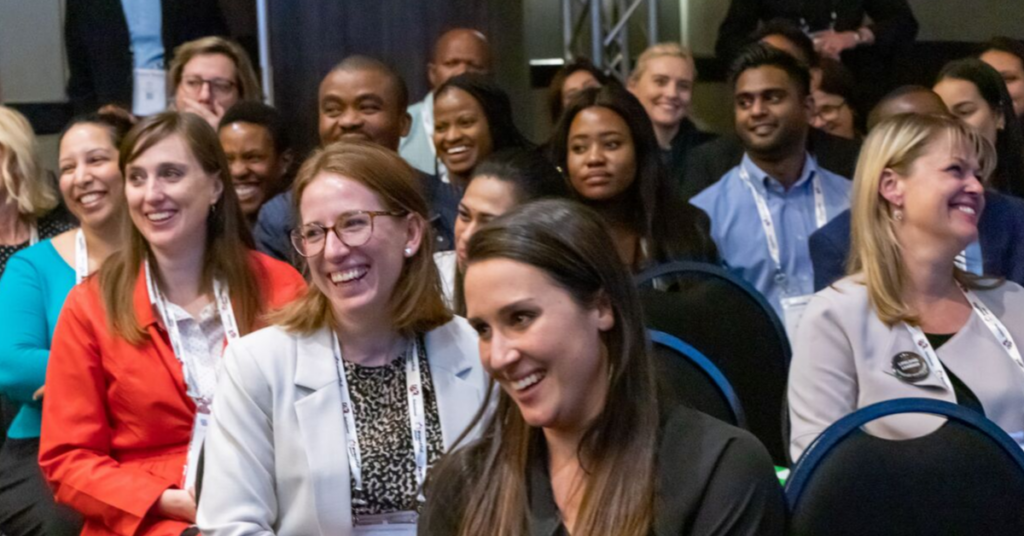
If I could share only three things with the ardent L&D specialist who could not make it to 2019’s HR & L&D Innovation & Tech Fest, they would be: “Learning is an ecosystem of experiences.” – Tim Slade “L&D has to change – otherwise we will become obsolete.” – Thea Pelser “Don’t throw out the baby with the bathwater.” – Wayne Mott This year, dedicated L&D speaker streams were introduced to the well-established HR Innovation & Tech Fest – a move heartily welcomed by South Africa’s corporate learning community. Professionals are still finding their feet in this ever-changing technological and organisational landscape, and the Eventful Group’s first roll-out has been right on target. Their diverse buffet of topics had the entire L&D tribe feasting – content developers, specialists, technologists and managers; rookies and veterans. “We are living and working in an incredibly disruptive time – technology is changing the way we work and live and it is only fitting, and essential, that the way we view and implement L&D endeavours keeps up,” says Andrea Erasmus, Co-Owner & Head of Production for The Eventful Group. “Some of the greatest minds in the L&D space came together under one roof during this conference. It connects people and gives the growing L&D community a unique platform to come together and learn, network and share ideas, challenges and wins.” Alice Herselman, Learning & Development Specialist at Oceana Group chose the talk on Sasol’s approach to designing their Learning Technology Ecosystem as her first session, “I’m so happy that I did – this is exactly where my organisation and team are at.” The compelling mix of speakers included international representatives that inspired, warned and equipped from their generally more-evolved L&D arena. Local speakers, in turn, shared their mighty feats of the corporate culture empires they built through the right Learning Management Systems, the stakeholder hearts they conquered, and the magic of Augmented Reality they harnessed. Learning is an Ecosystem of Experiences We’ve all seen this or have even designed it: learning content that is simply not crafted for how adults learn, or even worse – not designed to solve the actual performance issue. The award-winning US freelance eLearning Designer, Tim Slade, has a hard-won understanding of why learning fails (or rather, sucks, to bring home his point more vividly). “Sometimes,” he adds, “your role as an eLearning designer is to know when learning is not the answer – and be able to tell that to your clients or stakeholders.” Yet, even when we are clear on the need for a training programme, we have to avoid the next trap: blandly capturing information within a sterile online system and bombarding our learners with it. To create this ‘ecosystem of experiences’, we need to combine as many learning styles as possible, make learning active, and embrace blended learning. A forward-looking example of this is our own Zolani Lugawe from SA Taxi Development Finance that evangelized the digital learning revolution in his session: breaking ground for his organization, he incorporated AR (Augmented Reality) in a recent learning journey. L&D Has to Change – Otherwise We Will Become Obsolete “Call anything a pilot and people will try it.” This is how Thea Pelser got her L&D show on the road in 2014. As PwC South Africa’s Associate Director for Learning & Development, she ventured into very unchartered territory for this chartered community – forging their very own online learning programme. Her success was self-evident: with the average completion rate of MOOCS (massive open online courses) at only 10%, their programme reached an astounding 75%. However, her moment of true triumph happened when top management started to ask for more online learning. Two of the biggest obstacles was the perception around the quality of “eLearning”, and getting the right backing for her L&D development plans. She instead labelled her programme “self-paced learning”, and as for garnering support, she suggests we “work where the energy is; work with people that love new things.” Yet this journey has also brought her to a very sobering realization: “L&D has to change – otherwise we will become obsolete.” Don’t Throw Out the Baby With the Bathwater Wayne Mott from Agilite Consulting shared the journey that Melbourne Waters undertook to create an intuitive learning system that could seamlessly blend into the ever-busier lives of learners, using JIT (just-in-time), WIIFM (what’s-in-it-for-me) and micro-credentialing formats. The vibrant, interactive end-result was called “The Pond”. Creating a platform on this scale can be intimidating to South African L&D managers – how do we suddenly break away from the course we’ve set (often based on limited funds, technology, and infra-structure) to align with what is on offer nowadays, at a much lower cost that just 5 years ago? Wayne’s advice is perfectly pitched, “Don’t throw the baby out with the bathwater – use what you have while you adjust and improve your learning pathways over time.” Looking to the future, he also urged us to remember the ever-decreasing information half-life. In an era where the-learning-and-unlearning cycle will become the norm, learning how to learn will become one of the most prized skills. During the panel discussion wrapping up the conference, Wayne mirrored Thea’s warning on the crucial need for adaptability, “At a next conference, I would like to deep-dive into how L&D needs to reinvent itself – and change to support what’s to happen in the future.” “Upskilling,” concluded Jessica Miller-Merrell, an American speaker from Workology, in a final question about global trends, “It is going to be pretty universal across the workforce.” Learning and Development in South Africa must be ready. We must be resilient, resourceful, and as always, ragingly passionate. The conference sponsors also had their say: “The Eventful Group’s conferences are always the most relevant – the team is very meticulous when it comes to the detail and very accommodating to last-minute requests.” – Judith Aranes, Marketing Manager for BountiXP.com “Of all the annual human development conferences in South Africa, we find this one the most fruitful.” – Geoffrey Payne, Product Development Manager from Lesson Desk About the Author Ilse de Vries is a human-development zealot and hopelessly excited about learning and development, in South Africa and in its digital incarnation. She is also an adventurous content strategist and content creator. Over the last two decades, she has honed her skills as a learning and marketing specialist in the UK, Japan and South Africa.
Why Learning and Talent Mobility Are Key in Today’s Workplace

A decade ago, few of us worked with a director of employee experience, a director of organisational learning and development, or a vice president of global impact and employee life. These roles were few and far between, which is just one simple example of how our workplaces are changing. The “2019 Deloitte Global Human Capital Trends” report surveyed nearly 10,000 respondents in 119 countries to get more insight into workplace changes, and how we’re reconsidering our approach to jobs; new recruiting, hiring, and retention practices; and the adoption of technology in the workplace. The report identified 10 trends for companies to focus on for meaningful impact. In this post, I’ll explore two trends relating to learning and talent mobility that have particular resonance for human resources leaders. Learning in the Flow of Life The No. 1 reason people quit their jobs is the “inability to learn and grow,” according to respondents of the Deloitte report. It follows, then, that the No. 1 trend in 2019 is for organisations to change the way people learn, with 86 percent of respondents rating this issue important or very important. Jaime Fall, director of The Aspen Institute’s UpSkill America, confirms that “lots of surveys show that if millennials and Gen Z workers don’t feel their employers are investing in their education, training, or development, they’re not going to stay.” There’s another business reason to support prioritizing continuous learning. As Workday Chief People Officer Ashley Goldsmith says, “Advances in technology will continue to change the way we view talent and organize our workforces. In the face of this, it will be HR’s responsibility to provide the leadership necessary to ensure workers have the new skills required for our organisations to remain agile, efficient, and prepared for whatever disruptions the future brings.” Building up the right skills is critical. In fact, Deloitte cites a recent World Economic Forum report that found 54 percent of all employees “will require significant reskilling and upskilling in just three years.” So how are HR leaders addressing these challenges? Deloitte’s survey revealed the following: Eighty-four percent of organisations surveyed are increasing their investment in reskilling programs, with 53 percent saying that they would increase this budget by 6 percent or more. Seventy-seven percent of organisations surveyed are increasing their learning team’s headcount, elevating learning to the second-fastest-growing role in HR. Organisations that invest in an always-learning, agile workforce will be more prepared to adapt to change and achieve their growth objectives, yet companies can do more than they’re currently doing. Other research bears out the importance of upskilling. Our global study, “Organisational Agility at Scale: The Key to Driving Digital Growth,” found that leading organisations—in terms of digital revenue growth and five identified attributes of organisational agility—are four times more likely than their less agile peers to plan to upskill more than 75 percent of their workforce. Smart leaders understand that these numbers are important. Feon Ang, vice president for talent and learning solutions, Asia Pacific, LinkedIn, noted in a MarketWatch article that organisations must embrace a culture of learning to remain resilient in a rapidly changing workforce. Talent Mobility: Look Within to Win The race for top talent has always been top of mind for HR leaders, but the methods for finding and retaining that talent has shifted. Sometimes, the best candidates are already working at your company, and the Deloitte report highlights that organisations must embrace internal mobility as a “natural, normal progression.” In fact, supporting the internal mobility of talent is good for employees and employers alike. It enables employees to continue to feel challenged and engaged with their work, acquire new skills, help fill organisational skills gaps, and make progress toward broader career goals. Additional drivers for internal mobility include expansion of operations, including globalization, and the shift of many organisations toward flatter organisational models. As a result, there’s a need to put employees in different roles, on different projects, or in different locations. The No. 1 reason people quit their jobs is the “inability to learn and grow,” according to the Deloitte report. Companies have strong business reasons to make internal talent mobility a priority. When Deloitte looked at the fastest-growing organisations, defined as those growing at 10 percent or more compared to the prior year, “they were twice as likely to have excellent talent mobility programs than organisations that were not growing at all, and more than three times more likely than organisations whose revenues were shrinking.” And yet more than 50 percent of this year’s survey respondents told Deloitte that it “was easier for employees to find a job outside their organisation than inside.” While the report found that internal mobility is a high priority, it’s difficult to do well. Only 6 percent of respondents described themselves as “excellent” at moving internal talent from role to role; 59 percent rate themselves fair or inadequate. The research turned up a number of reasons that organisations find it so challenging: Organisations don’t have the processes in place to identify internal candidates. Organisational silos pose a challenge for both managers and employees to look beyond their own groups and find the right roles and the right candidates. The necessary technology and systems are not in place to promote internal mobility. Incentives typically don’t exist for internal hiring, and the workplace culture does not promote talent sharing. Investing in internal mobility can help employers find solutions to their talent needs, create more growth opportunities for employees, and develop future leaders. Cristina Goldt, vice president, HCM products, Workday, explains that one way to do that is for organisations to get comfortable with using a talent marketplace model to mobilize existing employees and promote internal mobility. “Looking within,” according to the report, “can make the crucial difference between struggling and succeeding.” Are You Ready for the New World of Work? Work is changing in ways that are completely unprecedented. In order to succeed and thrive in the new world of work, organisations must avoid the comfort of complacency. If companies are willing to challenge the old ways of doing things, embrace the changes that accompany technological innovation, and put employee development and engagement at the center of their business, together, they will create a better future of work. About the Author Julie Jares is a Workday staff writer covering professional services and human resources trends that impact business leaders.
HR Has Become Our Moral Compass for Data Protection
An ethical approach to data starts with employees. If people don’t manage information responsibly, how can we hope to track it, much less protect it? Education is the key to driving awareness, which is why HR must take the helm in driving this behavioural change across the business. Who would have thought flash drives would become our worst enemy? The convenience of USB sticks and mobile phones has made us more productive, but it has also created a logistical nightmare for businesses that need to track and manage all the data flowing around their organisation. Employees may take data management and security more seriously today, but these risky practices are still prevalent. Consider how companies manage performance reviews. Not long ago, or even still today, data from discussions with employees would be entered in a spreadsheet and shared across the business, with a minimal record of who, what, or why it changed hands over time. This approach is or should be no longer acceptable, not just logistically but also from an ethical perspective – employees demand and deserve greater transparency into how their data is being used. Which brings us to the value of training and HR’s crucial role in driving a more conscientious approach to data management. Today, just 35% of HR decision-makers feel fully confident in their organisation’s ability to manage data securely, which is why companies like NatWest have launched data academies to train their employees on the value and power of data they work with each day. Extending this to the wider business, awareness and best-practice are the biggest culprits in the push to handle data ethically: 29% of respondents cited employees’ managing data through mobile devices or social platforms 28% cited low attention to data confidentiality, and 24% cited outright blindness on how data is supposed to be used Reading between the lines, this means companies need better training for their employees on the importance and implications of how they manage data. In essence, HR must act as the moral compass that brings about this change, helping to ensure employees across the business put ethics first when working with data. With the right processes in place, there’s no reason that ethics and convenience can’t coexist. Encouragingly, 34% of HR leaders have made it a priority to raise awareness around data security threats, and 40% have a data management strategy place. These are major steps forward for a department that in many organisations is still transitioning to a data-driven way of working. There is more work to be done, but with HR serving as a strong moral compass, every team in the business will move towards a more considered approach to data management. This greater focus on ethics won’t just help to secure sensitive information. It will also help HR to build a strong employer brand, which will, in turn, help them attract more data-conscious talent, improve productivity, and foster a more diverse working environment. Discover how HR departments are contributing to their organisation’s data security in our report. About the Author Ronnie is currently the HCM Development & Strategy Leader for Africa at Oracle where he has worked for the past 15 years. He is also part of the Oracle Global Luminaries programme as the HCM thought leadership representative for ECEMEA. In his role, Ronnie travels extensively to speak at events around South Africa (including the first HR Tech Fest in 2016 and again in 2017 and 2018) as well as in most Sub-Saharan Africa countries.